
How our heaters are different.
At Hotseat Masonry Heaters using the batch box design coupled with bell theory allows us to build a simpler stove using less materials and less labor than a tradional masonry heater.
At Hotseat Masonry Heaters using the batch box design coupled with bell theory allows us to build a simpler stove using less materials and less labor than a tradional masonry heater.
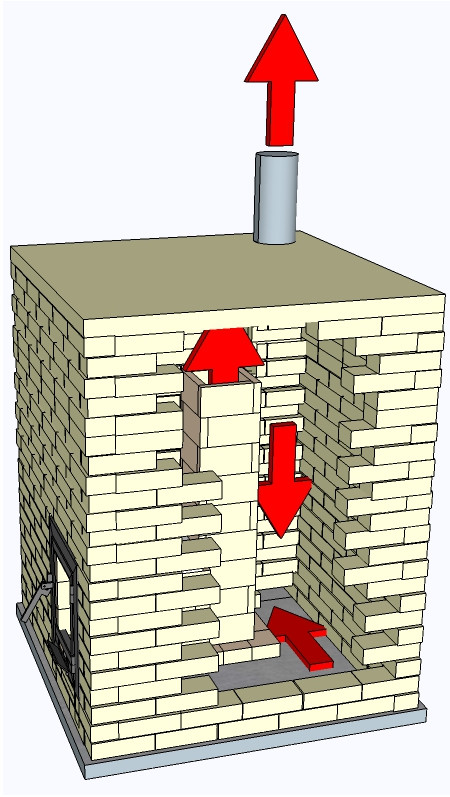
The type of stove that we build uses the Batch Box core designed by Dutch inventor Peter van den Berg coupled to the Russian bell. The bell greatly simplifies the stove by using the free gas movement theory. The bell's interior can be visualized as a cubic form with an exit at the bottom. Gases fill the bell and as they cool they stratify with the hottest gasses displacing the cooler gasses. The coolest gasses then escape out the exit at the bottom as you can see in the picture to the left. This allows a very simple and effective extraction of heat from the gasses.
The bell can take on a variety of shapes allowing you to have a tall column, a horizontal bench, a surround bench or just about any shape you can think of.
Using the batch box rocket design construction is greatly simplified saving both materials and labor costs bringing the price into the range of most folks. We fabricate our own metal parts(doors, cleanouts etc. ) reducing costs significantly compared to the expensive European imports most builders use.
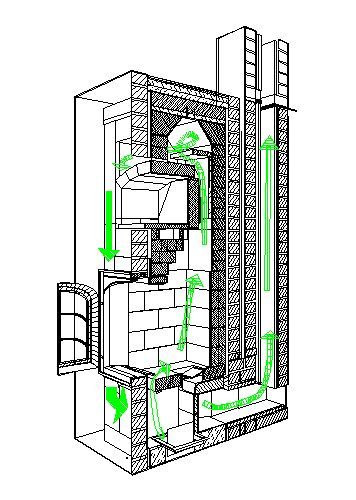
A traditional masonry heater is usually built using the design know as a Finnish Contra flow. While this is an excellent design it is also very complicated and expensive to build. As you can see in this diagram the internal pathways are complex and a large amount of materials are used to create the internal pathways.
Masonry Heater Fun Facts
The average Temperature of a wood stove flue is 300 to 450F in a masonry heater it's 150-200F. More heat extracted means more heat kept in the house and less wood burned.
A masonry heater allows a more intimate relationship with your heat source. Try hugging a woodstove(Well don't actually!). The reduced external temperatures of a masonry heater reduce house fire risks. A cooler external stove temperature greatly reduce burn risks to adults and children.
High combustion temps maximize stove efficiency and minimize pollution. Smoke leaving the chimney is wood you split for nothing. Capturing most of the heat from the fire in the stoves mass maximizes the efficiency and reduces the amount of wood burned. Clean burning reduces creosote buildup to near zero greatly reducing chimney fire risks.
Due to reduced setbacks from combustibles because of the cooler exterior a masonry heater can take up as much space as a conventional stove Slow gain and release evens out heat of house/room over long periods of time. No more more going to bed sweating and waking up freezing. No more polluting smoldering fires over night to mantain home temperatures.
Masonry heater drawbacks
Initially more expensive than a conventional wood stove. The thickness of the masonry walls means slower heat release from a cold start. Typically warm up times are around an hour. Stove needs a firm foundation to rest upon, a poured slab in most cases. Not well suited for drafty houses that need the rapid release of heat provided by a conventional stove.